Skip to main content
0
Collections
Editor's Picks
Trending
New
Sign In
Chemistry Prints
<
1
2
3
4
5
>
Liquid mercury in glass bottle
From £69.98
Alchemical symbolism: toad and serpent represent two basic types of element
From £69.98
Academy session in the Jardin du Roi
From £69.98
Louis Pasteur
From £69.98
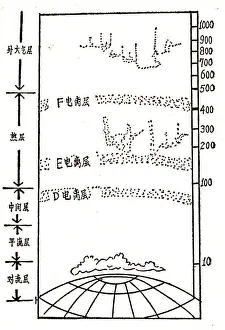
Graph of Structure of the Atmosphere
From £69.98
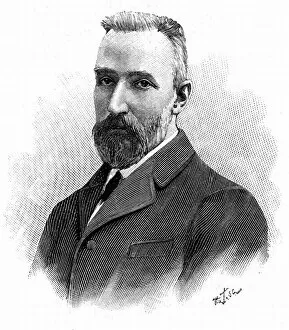
Pierre Curie (1859-1906) French chemist. Awarded Nobel prize for physics in 1903
From £69.98
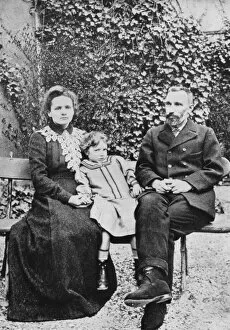
Marie (1867-1934) and Pierre (1859-1906) Curie. With their elder daughter Irene in 1904
From £69.98
Jacobus Henricus Van t Hoff (1852-1911) Dutch chemist. Winner of first Nobel
From £69.98
Dmitiri Ivanovich Mendeleyev (1834-1907), Russian chemist. Working at his desk
From £69.98
Spectroscope of the type used by Gustave Robert Kirchhoff (1824-1889) and Robert Wilhelm Bunsen
From £69.98
A corner of Pierre and Marie Curies laboratory, Paris. Engraving published 1904
From £69.98
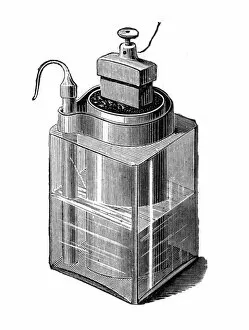
Wet Battery: Leclance cell, invented c1866. Glass vessel containing zinc rod, solution
From £69.98
Jospeh Priestley (1733-1804) English Chemist and Non-Conformist minister. One of
From £69.98
Wallace Hume Carothers (1896-1937) in the laboratory. Discovered of nylon while working
From £69.98
Vinolia Soap Companys London laboratory where raw materials and essential oils were tested
From £69.98
Karl (Carl) Bosch (1874-1940) German chemist. Haber-Bosch process for sulphate of ammonia
From £69.98
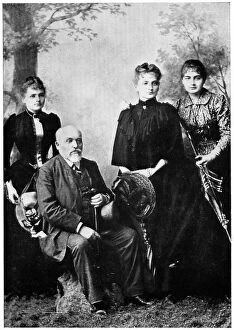
M. Sklodovski with his three surviving daughters
From £69.98
Lavoisiers apparatus for synthesizing water from hydrogen (left) and oxygen (right)
From £69.98
High voltage equipment used by Pierre and Marie Curie to investigate the electrical
From £69.98
Title page of Oeuvres de Pierre Curie
From £69.98
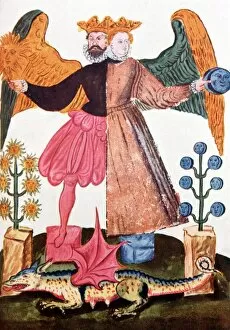
The Hermetic Androgyne: King equals Sun equals Gold, Queen equals Moon equals Silver
From £69.98
First year students at L Ecole Centrale des Arts et Manufactures, Paris, doing
From £69.98
Voltaic battery (pile): this was made up of a disc of zinc, a disc of copper, a disc
From £69.98
(Jean) Frederick Joliot-Curie (1900-1958), French physicist. Became assistant to
From £69.98
Marie Curie (1867-1935) Polish-born French physicist who
From £69.98
Justus von Liebig (1803-1873) German chemist
From £69.98
Marie (1867-1934) and Pierre (1859-1906) Curie. With their daughter Irene in 1908
From £69.98
Radium Institute, Paris, where Marie CURIE (1867-1934), Polish-born French physicist
From £69.98
August Wilhelm Hofmann (1818-1892), German organic chemist. Through his work on coal-tar
From £69.98
Marie (1867-1934) and Pierre (1859-1906) Curie pictured in their early married life
From £69.98
Hermes the Egyptian (Hermes Trismegistus) the legendary fount of occult and alchemical knowledge
From £69.98
A stage in the separation of radium from pitchblende using sodium carbonate
From £69.98
Apparatus used by the Curies to investigate the deflection of the beta rays from radium
From £69.98
Radium Institute, Warsaw, Poland, inaugurated 29 May 1932 in the presence of Marie Curie
From £69.98
Joseph Louis Gay-Lussac (1778-1850) French chemist and physicist
From £69.98
Joseph Priestley (1733-1804) English Chemist and Non-Conformist minister. One of
From £69.98
Distillation: Still in water bath (bain-marie), showing an Alembic. From Braunschweig
From £69.98
Ernest Rutherford (1871-1937) New Zealand-born physicist. Subatomic physics. Nobel
From £69.98
Magic lantern being used to project slides during a lecture on spectrum analysis
From £69.98
Ernest RUTHERFORD (1871-1937) New Zealand atomic physicist, Nobel prize for chemistry 1908
From £69.98
Marie Curie (1867-1934) Polish-born French physicist. Award Nobel prize for physics
From £69.98
The Curie family. Left to right standing, Jacques, Pierre (1859-1908) French chemist
From £69.98
House of the Szczuki family in Poland where Manya Sklodovska (Marie Curie 1867-1934)
From £69.98
Marie Sklodowska Curie (1867-1934) Polish-born French physicist. From a picture published
From £69.98
Marie Curie (1867-1934) Polish-born French physicist
From £69.98
Leclance cell, c1866, a type of wet battery. Zinc rod, left, central porous cell
From £69.98
Paracelsus (Theophrastus Bombastus Von Hohenheim) 1493-1541. Swiss-born German physician
From £69.98
Lavoisiers apparatus for weighing gases
From £69.98
Guillaume Francois Ruelle (1703-70) French chemist, Lavoisiers teacher. Professor
From £69.98
William Ramsay (1852-1916) Scottish chemist. With Rayleigh discovered inert gas Argon 1894
From £69.98
Jospeh Priestley (1733-1804) English Chemist and Non-Conformist minister. One of
From £69.98
Murex. The mollusc which inhabited this shell was the source of Tyrian Purple dye
From £69.98
Electroscope fitted with microscope, used in the Curies laboratory, Paris, to
From £69.98
Madam Sklodowska mother of Marie Sklodowska Curie (1867-1934) Polish-born French physicist
From £69.98
Cleopatra VII (69-30 BC) queen of Egypt, last ruler of the Ptolemaic dynasty, dissolving
From £69.98
Lyon Playfair (1819-1898) in 1885 when President of the British Association for
From £69.98
Countess Alexander Nikolaevitch Lamsdorff (born Maria Ivanovna Beck 1835-1866), 1859
From £69.98
The Alchemist 1661. Oil on panel. Adriaen van Ostade (1610-1685) Dutch genre painter
From £69.98
Top: Sectional view of workings under East River, New York, during preparations to
From £69.98
Workers in underground galleries putting cartridges of dynamite into position in
From £69.98
Blowing up Flood Rock, part of the Hell Gate Rocks complex which prevented large
From £69.98
Inserting detonators into cartridges of dynamite for blasting Flood Rock, East River
From £69.98
Blowing up Flood Rock, part of the Hell Gate Rocks complex which prevented large
From £69.98
Robert Boyle (1627-1691) Anglo-Irish chemist and physicist. Copperplate engraving
From £69.98
Laboratory at Thomas Firth & Sons Norfolk Works, Sheffield c1900
From £69.98
Lyon Playfair (1818-1898) Scottish chemist and politician, in the chair as Deputy
From £69.98
The Hermetic Vessel, c1760. Hermetic vessel in the alchemical furnace. The serpent
From £69.98
Distillation 1882. Cross-section showing furnace heating a still. Matter distilled
From £69.98
Distillation 1500. Three alembics stand on top of furnace. The distillate condenses
From £69.98
Distillation 1500. Distilling using double pelicans. From Liber de arte distillandi
From £69.98
Distillation 1500. The Rosenhut, a form of still. From Liber de arte distillandi
From £69.98
Lavoisiers investigation of the existence of oxygen in the air. Mercury in trough
From £69.98
Nicolas Lemery (1645-1715) French physician and chemist. Lemery giving a public lecture
From £69.98
Title page of Elias Ashmoles Theatrum Chemicum Britannicum London 1652. Isaac
From £69.98
Alchemical laboratory showing various forms of furnace and vessels. From Elias Ashmole
From £69.98
The four great alchemists. From left to right: Al-Jabir (Geber 14th century Spanish)
From £69.98
Thomas Nortons (fl1477) laboratory. Engraving after manuscript in British Museum
From £69.98
Colorimeter, after design by Labilliardiere with modifications by Salleron
From £69.98
Guillaume Francois Rouelle (1703-1770) French chemist. Lavoisiers teacher: Professor
From £69.98
Distillation of oil of vitriol also known as sulphuric acid, 1651. Iron retort with cover
From £69.98
Platinum still for concentrating sulphuric acid. Felling Chemical Works, Newcastle, 1844
From £69.98
Sectional view of Gay-Lussacs lead chambers and absorption towers, 1870. These
From £69.98
Sectional view of lead chamber process for large-scale production of sulphuric acid 1870
From £69.98
Lead chamber for production of sulphuric acid also known as Oil of Vitriol or H2S04, 1866
From £69.98
<
1
2
3
4
5
>
Printed to Order and Licensed for Personal Use
© Copyright UIG - All Rights Reserved 2026
Orders fulfilled by
Media Storehouse
®